
Privacy screen protectors, AR films, ultra-clear films, shatter-resistant films, and more keep flooding the market. Technical specs such as '9H hardness,' 'fingerprint-resistant,' and '99% light transmittance' only add to the confusion. So which tempered glass film suits you best? Today, we’ll analyze mainstream tempered glass film categories—from core functionality and target users to critical pitfalls—to help clarify your purchasing strategy.
Ultra-Clear Film
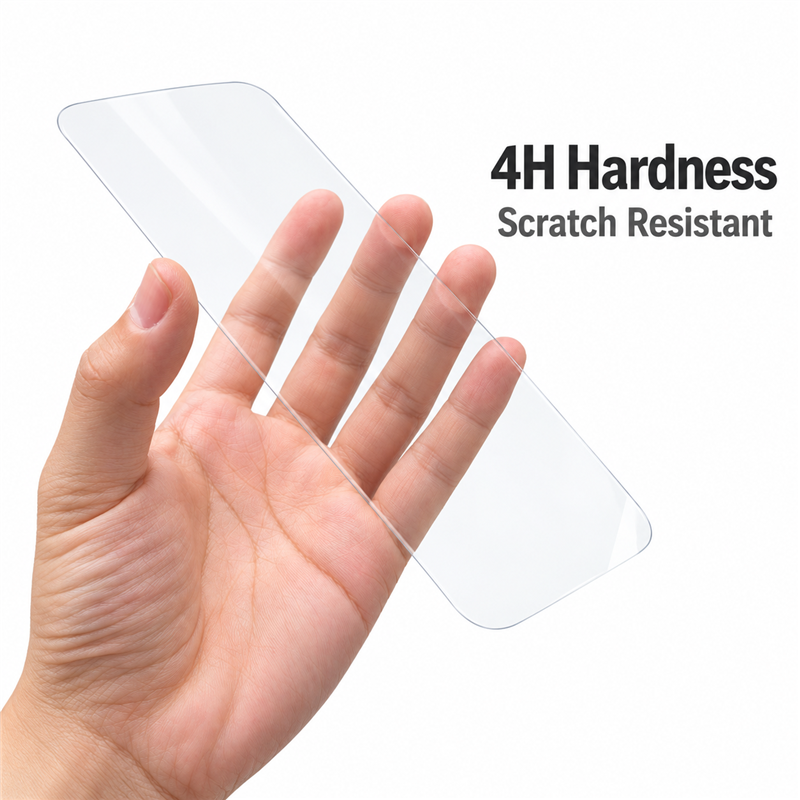
The ultra-clear film (also known as HD film) is the most fundamental and classic tempered glass category, with its core advantage being 'high light transmittance.' Premium ultra-clear films typically achieve over 90% light transmittance, while some high-end models approach 99%, faithfully reproducing the screen’s original color accuracy and sharpness.
In terms of protection, ultra-clear films deliver solid baseline performance: most feature an electroplated fingerprint-resistant coating, minimizing smudges and oil residue during daily use; hardness generally meets the '9H' standard, offering resistance against everyday abrasives like keys or sand particles.
However, ultra-clear films have clear limitations: most entry-level versions offer only modest drop protection—insufficient if your phone frequently falls.
Privacy Screen Protector
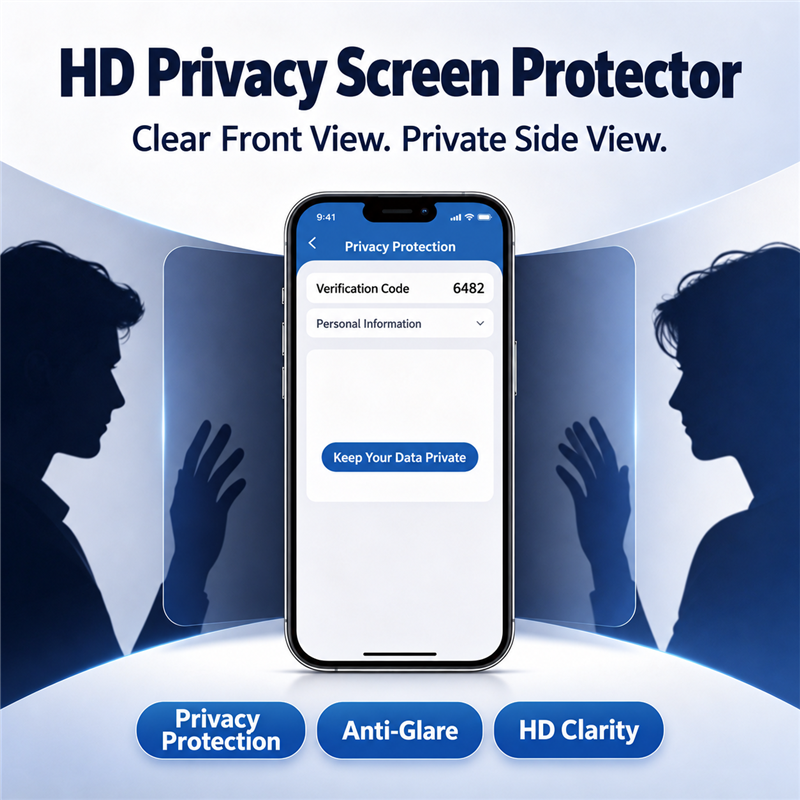
The privacy screen protector’s core selling point is 'privacy protection.' Using specialized optical coatings and a louver-style optical structure, it restricts the screen’s viewing angle to 30°–45°, allowing content to be clearly visible only when viewed head-on. From the side, the screen appears nearly black—effectively preventing shoulder surfing.
Yet privacy protectors come with notable trade-offs: To achieve privacy, their light transmittance drops significantly—typically between 70%–80%—making the screen noticeably dimmer. Prices are slightly higher than ultra-clear films, with mainstream options ranging from ¥20–¥50. Also note: Privacy protection works horizontally ('left-right'), but not vertically—content remains visible when viewed from above or below.
AR Film
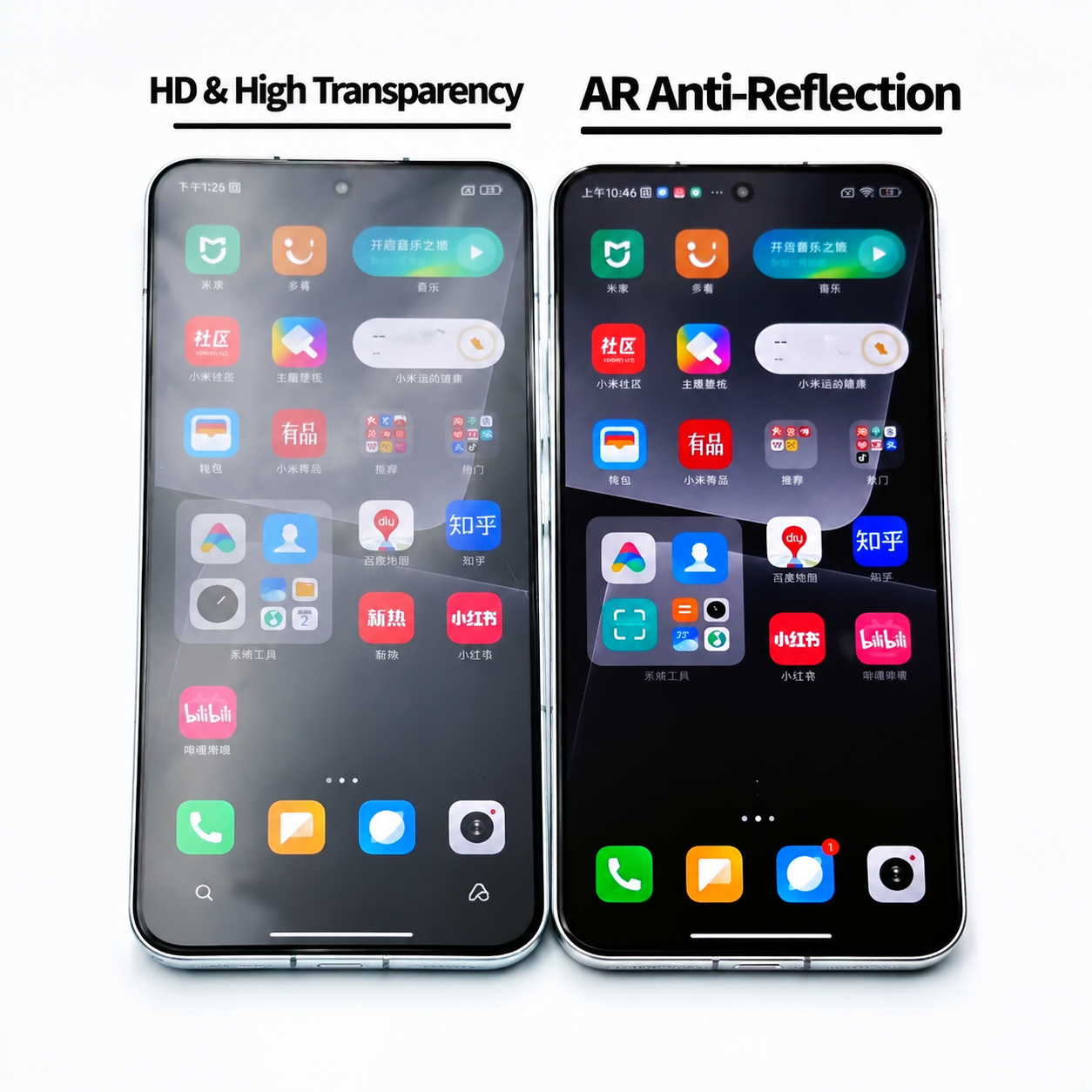
AR film (short for 'Anti-Reflective Tempered Glass') is a recently emerged premium option focused on 'enhancing screen usability.' Its core advantages are 'anti-glare performance' and 'high color gamut fidelity.' Utilizing multi-layer optical coating technology, it effectively reduces ambient light reflection off the screen surface—ensuring clarity even under strong outdoor sunlight or direct indoor lighting.
Meanwhile, AR film’s light transmittance approaches that of ultra-clear films, with top-tier models reaching over 95%, delivering exceptional color fidelity and natural, transparent visuals. However, AR films command premium pricing—mainstream models range from ¥50–¥150. Additionally, their drop resistance mirrors that of ultra-clear films ('basic shatter resistance'); for maximum protection, pairing with a shatter-resistant phone case is recommended.
Shatter-Resistant Film
The shatter-resistant film is specifically engineered for 'screen fracture prevention,' with its core strength lying in 'superior impact resistance.' Common designs include 'dual-layer glass + central shock-absorbing adhesive layer,' 'edge air-cushion protection,' and 'flexible glass substrate'—all designed to absorb impact energy during drops and reduce screen cracking risk.
However, shatter-resistant films have clear drawbacks: Thickness is typically 0.1–0.2 mm greater than standard tempered films, resulting in a perceptible 'heaviness' after application. On smartphones equipped with ultrasonic fingerprint sensors, this added thickness can significantly impair unlock responsiveness. Light transmittance is also slightly reduced—generally falling between 90%–92%. Pricing for mainstream shatter-resistant films ranges from ¥20–¥50.
Frosted Film
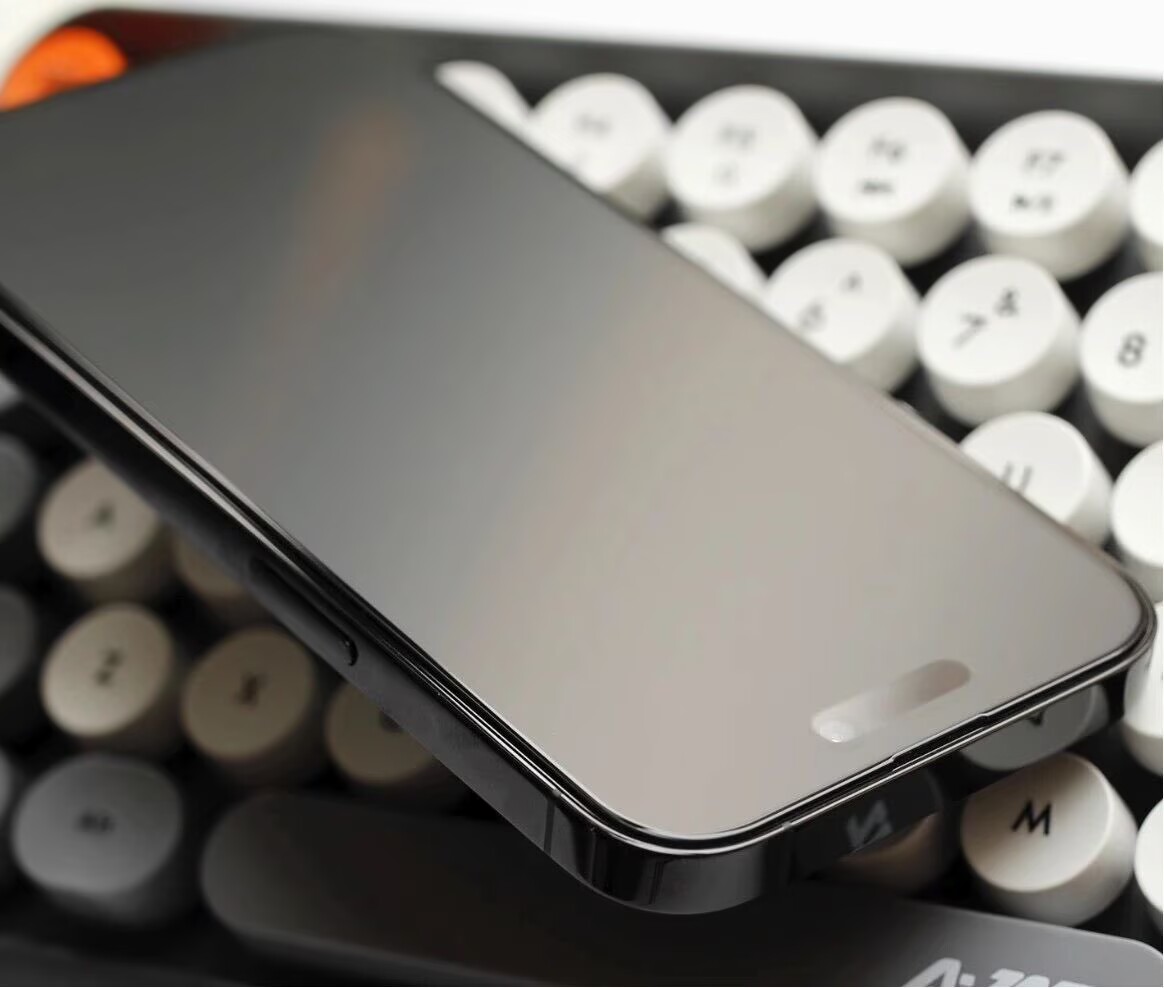
The frosted film’s defining trait is its 'matte surface texture.' Achieved via micro-textured matte finishing, it creates subtle microscopic peaks and valleys—fundamentally solving 'sweaty-finger slip' issues. The tactile experience is smooth and refined, greatly improving grip and control during gaming or other touch-intensive tasks.
However, the matte texture reduces light transmittance—typically 85%–90%—giving images a mild 'frosted' appearance and slightly diminishing fine detail and color fidelity compared to ultra-clear and AR films.
Blue Light Filter Film
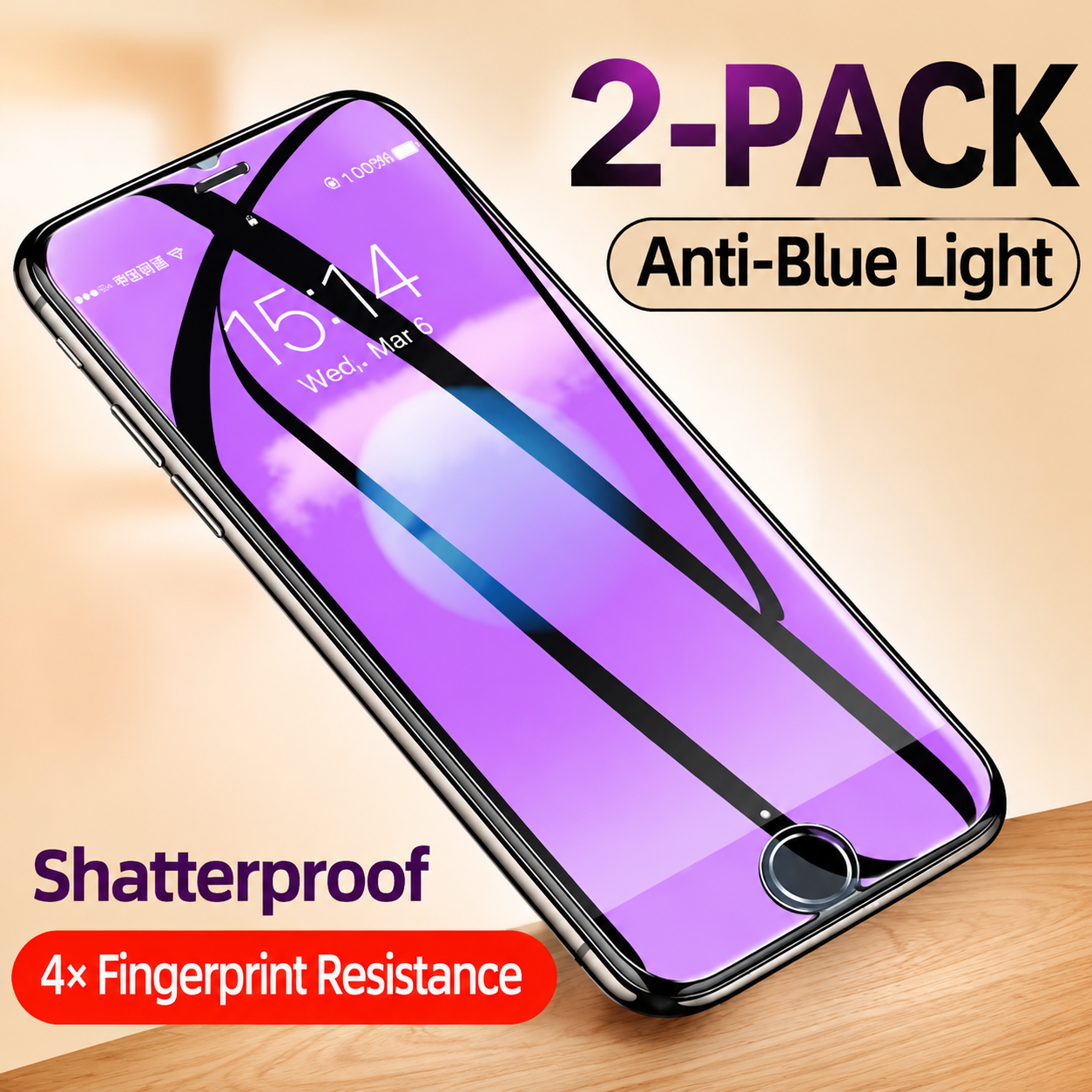
The blue light filter film focuses on 'blue light filtration and eye protection.' By embedding blue light filtering agents into the film material, it blocks 30%–50% of short-wavelength blue light emitted by screens—potentially reducing eye fatigue during extended use.
Yet this benefit comes with side effects: Screens may exhibit slight yellowish tinting, compromising color accuracy. Moreover, the actual eye-protection efficacy of blue light films remains scientifically debated. Experts recommend prioritizing built-in smartphone features—such as brightness adjustment and native 'Eye Comfort Mode'—as primary protective measures, treating blue light films as optional supplementary tools.
Purchasing Pitfalls to Avoid: 3 Critical Points You Must Not Overlook
1. Insist on 'True Device-Specific Molding'—avoid generic 'one-size-fits-all' films. Microphone, camera, and fingerprint sensor cutout positions vary across devices; only 'true device-specific molded' films guarantee precise cutouts and full functional compatibility.
2. Don’t Be Fooled by 'Hardness' Claims—Prioritize 'Drop-Resistance Structure.' Many sellers advertise '9H hardness' and 'impact/shock resistance,' but '9H' refers solely to pencil-hardness scratch resistance—not drop resistance. Real shatter protection depends on structural design: e.g., dual-layer glass construction, shock-absorbing adhesive layers, etc.
3. Avoid 'Low-Cost Inferior Films'—Beware of Health Risks. Tempered films priced under ¥10 often use substandard glass and adhesives—resulting in poor light transmittance, brittleness, and potential release of hazardous substances. We recommend choosing reputable brands with recognized quality certifications (e.g., SGS, CE) for safer, more reliable performance.
Final reminder: Tempered glass films are consumables. Replace them promptly once visible scratches, cracks, or diminished fingerprint resistance occur. Select based on your real-world needs—privacy, shatter resistance, gaming responsiveness, eye comfort—and pair with a compatible phone case for comprehensive screen protection.