
Optical privacy film is a screen-compatible privacy protection accessory. With its core feature—“clear display from the front, blurred visibility from the sides”—it has become the mainstream screen privacy solution today. Compared with physical shielding (e.g., privacy hoods) or software-based privacy methods (e.g., localized blurring), optical privacy film offers strong device compatibility, no impact on equipment portability, and an excellent balance between light transmittance and privacy performance. It is now widely used in consumer electronics, office equipment, finance, healthcare, and other fields.
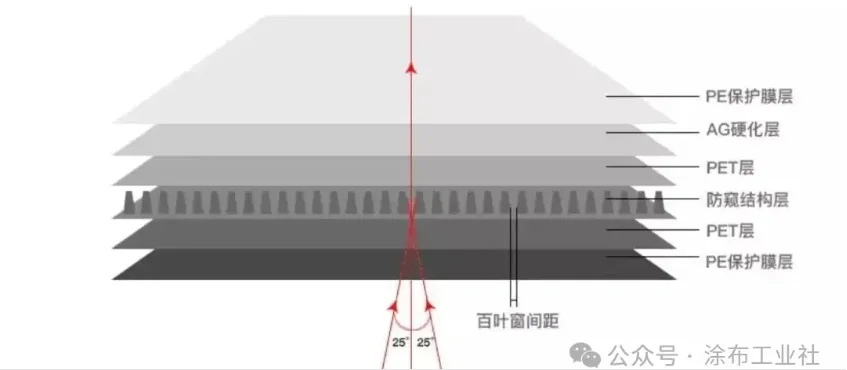
The core function of optical privacy film is “viewing angle limitation,” achieved fundamentally through precise microstructure-based optical design that controls the direction of light propagation.
Core Technology of Privacy Films
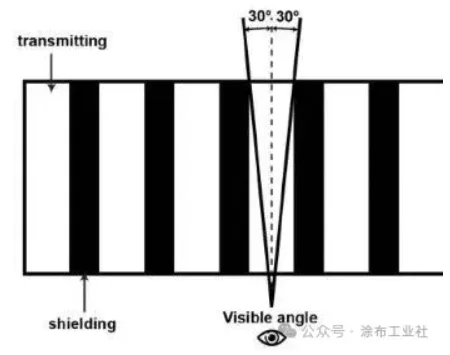
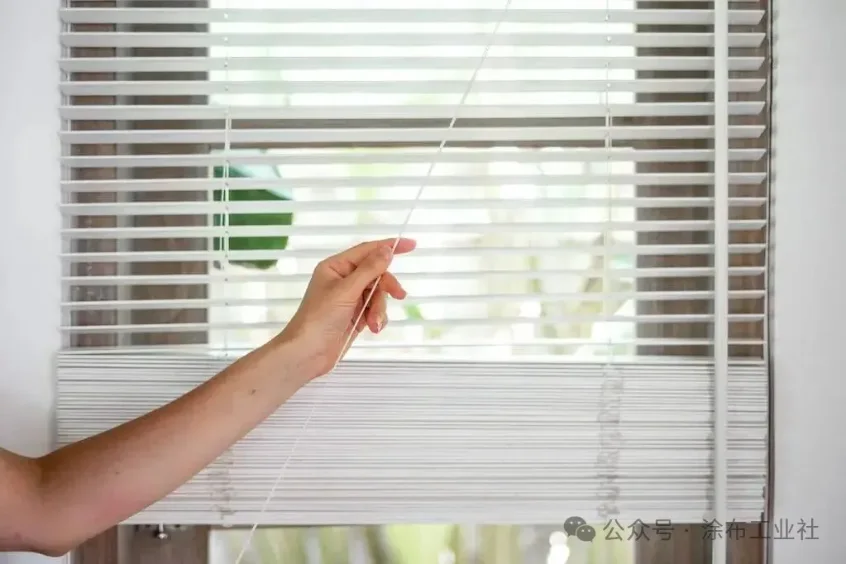
It employs ultra-fine micro-blind optical technology. When looking through conventional blinds from different angles, one sees the full outdoor scene head-on, but side views are blocked by the blind slats—making it nearly impossible to see outside. Similarly, privacy films achieve their effect by systematically reducing the spacing between blind slats to form an ultra-fine slat layer. This ensures that only the narrowest cross-sectional area of each slat obstructs light when viewed straight-on, maximizing light transmittance and visibility for the viewer. As the viewing angle tilts, the obstructed light area increases progressively, causing transmittance—and thus screen brightness—to decline. Once the tilt reaches a certain threshold, the screen dims completely, rendering content invisible to side viewers and thereby protecting screen privacy.
Typical Structures of Privacy Films
Currently, two main microstructure types dominate the optical privacy film market, differing in their light-control logic:
1. Micro-Blind Structure
This is the most widely adopted design. The film layer contains parallel-aligned “light-blocking slats” and “light-transmitting gaps.” Slats are made of highly opaque material (e.g., high-opacity resin), with widths of 5–20 μm and thicknesses of 1–5 μm; gap widths are only 1/3–1/2 of the slat width.
Frontal, low-angle light: Travels straight through the gaps without significant obstruction, ensuring sharp frontal display.
Side, high-angle light: Enters at too large an angle relative to the gaps, resulting in direct blockage by the light-blocking slats—or reflection away from the observer’s line of sight—causing a sharp drop in side brightness (typically only 10%–20% of frontal brightness), achieving privacy protection.
This structure delivers stable privacy performance (due to direct physical blocking) and lower cost, making it ideal for consumer electronics applications.
2. Lenticular Lens Structure
This design uses a periodic array of convex micro-lenses to control light. Lenses are fabricated from transparent optical materials (e.g., PET or PMMA), with diameters of 10–30 μm and heights of 5–15 μm, arranged regularly on the film surface.
Frontal light: Refracted by lenses with minimal directional change, reaching the viewer’s eye normally.
Side light: Enters at a large incident angle; refraction significantly shifts its path away from the side viewer’s field of view, preventing clear image formation and resulting in visual blur.
This structure achieves higher light transmittance (no light-blocking slats mean less optical loss), but demands tighter tolerances for lens size precision and uniformity of arrangement—commonly applied in premium privacy films (e.g., automotive displays, medical equipment screens).
Future Trends of Privacy Films
As demand for privacy protection in electronic devices intensifies, optical privacy film technology will evolve along three key directions:
1. Microstructure refinement: Developing smaller (≤5 μm) and more precisely aligned microstructures to improve viewing-angle accuracy (e.g., enabling “adjustable privacy range: 20°–40°”).
2. Cost-effective manufacturing: Optimizing photolithography efficiency (e.g., adopting roll-to-roll continuous lithography) to reduce mass-production costs for high-end privacy films.
3. Functional integration: Combining additional features such as blue-light filtering and antimicrobial properties (e.g., incorporating blue-light-absorbing particles or antimicrobial agents into coatings) to expand application scenarios (e.g., children’s devices, medical terminals).
In the future, optical privacy films will achieve superior balance among “privacy performance,” “display experience,” and “functional versatility,” solidifying their role as the core technical solution for screen privacy protection.
If you’re comparing products across different sizes and application scenarios, explore our dedicated Privacy Film Product Hub. For bulk orders, sampling, or custom solutions, please contact us.
Note: This article describes common optical structures and operational principles. Material composition, number of layers, viewing angles, and display performance may vary across products due to design and process differences—always refer to specific product specifications and actual test results.