
Why can the same smartphone screen be clearly viewed from the front but appears dimmed when seen from the side? Common privacy films use internal micro-louver structures to restrict screen light propagation in certain directions, making it harder for onlookers at the side to discern content. This effect stems from optical control over the light-emission angle. [1]
How Micro-Louvers Control Light
The English term for micro-louver is Microlouver. It is not a set of mechanically actuated blades that open and close, but rather an optical layer composed of transparent regions interspersed with fine light-absorbing structures—imagine it as fixed, light-blocking grilles embedded within a transparent material.
Within its functional cross-section, light rays traveling near the normal (frontal) direction pass through unimpeded; whereas rays arriving at steeper angles are more likely to strike the light-absorbing structures and thus become attenuated. As a result, the effective light emitted toward the sides decreases, narrowing the viewing angle. [1]
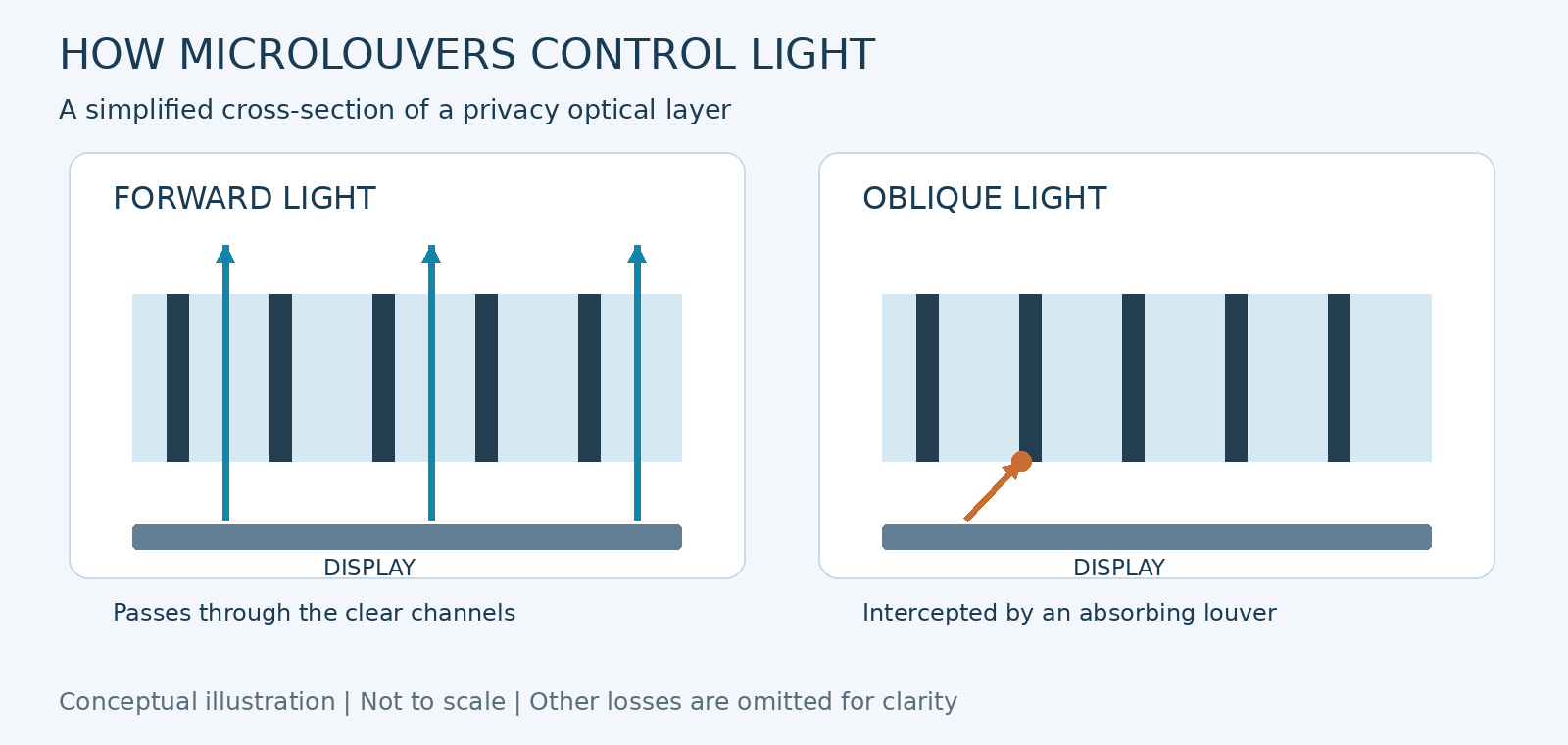
Fig. 1 Simplified cross-sectional diagram illustrating how micro-louvers control light — Not drawn to scale; other optical losses omitted for clarity
Why the Screen Appears Dimmer from the Side
When the viewer’s eyes move outside the normal viewing range, less screen light reaches them, causing both brightness and legibility to decline. In practice, this may manifest as darkening, difficulty reading text, or near-blackout at certain angles—not all products render content completely invisible at every lateral angle.
This process does not involve “reflecting light back onto the screen,” nor does it actively reduce screen resolution. The film primarily alters light transmission characteristics across different viewing directions.
Why Frontal Viewing May Also Feel Dimmer
Frontal viewing does not guarantee lossless light transmission. The privacy structure blocks part of the light, and inherent optical losses occur at material interfaces and within the film itself—thus display brightness may decrease after application. The degree of dimming varies across products; no universal percentage applies. [2]
When evaluating user experience, consider three aspects simultaneously: clarity from the front, comfort under everyday brightness levels, and reduced readability from restricted angles. Simply assuming “the darker, the better” fails to reflect the true quality of a privacy film.
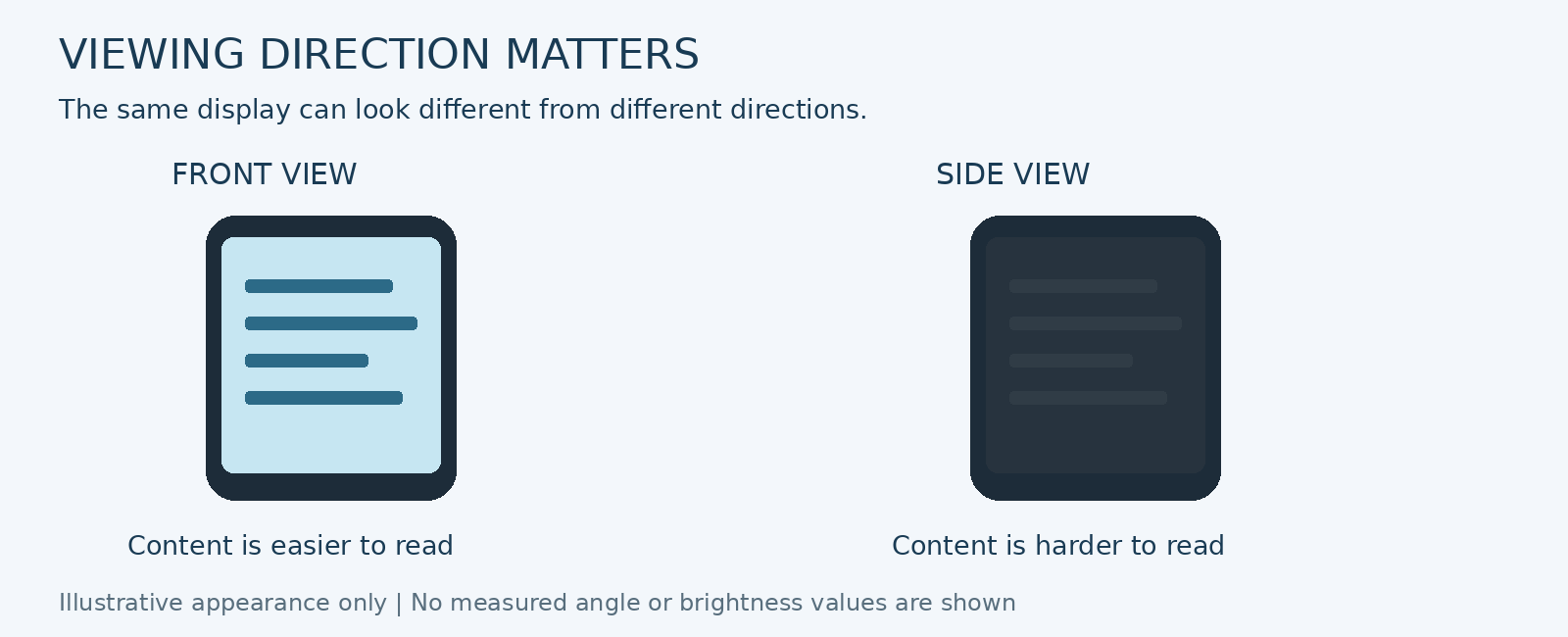
Fig. 2 Conceptual illustration of visual effects under different viewing angles — Not actual test results or performance comparison of specific models
Privacy Effect Depends on Direction and Usage Conditions
The privacy coverage zone depends on microstructure height, pitch, and orientation. Left-right privacy films mainly restrict lateral viewing along one axis, while four-directional privacy films extend restriction to the perpendicular axis. After rotating the phone, users must reconfirm the actual shielding direction—equal protection across all angles cannot be assumed.
Additionally, screen brightness, viewing position, content contrast, and ambient lighting all influence whether bystanders can recognize displayed content. If a bystander’s line of sight remains within the visible cone—for example, viewing from directly behind the user along a similar direction—the privacy film may fail to conceal the content.
Realistic Expectations When Using Privacy Films
Privacy films help reduce lateral information exposure during commuting or office work, but they are not absolute privacy barriers. When purchasing, verify compatibility between privacy direction and display experience; exact viewing angles and light transmittance should be referenced from the specifications and test conditions of the corresponding model. For sensitive information, remain vigilant about surroundings and complement film use with lock-screen settings and notification privacy controls.
References
1 3M Advanced Light Control Film — Principles of light control and definition of viewing angle
2 Belkin Privacy Screen Protectors — Privacy principles and display experience