
The side-view privacy effect of privacy films originates from their internal optical structure. The transparent support layer, surface treatments, and adhesive layer respectively influence the film’s stability, durability, and installation experience. Understanding these components helps distinguish the product’s actual functionality from temporary protective materials used during installation.
Below is an example using self-adhesive polymer privacy film. Layers, materials, and stacking configurations may differ among manufacturers and across flexible-film versus glass-composite products; therefore, no single structural diagram can represent all privacy films.
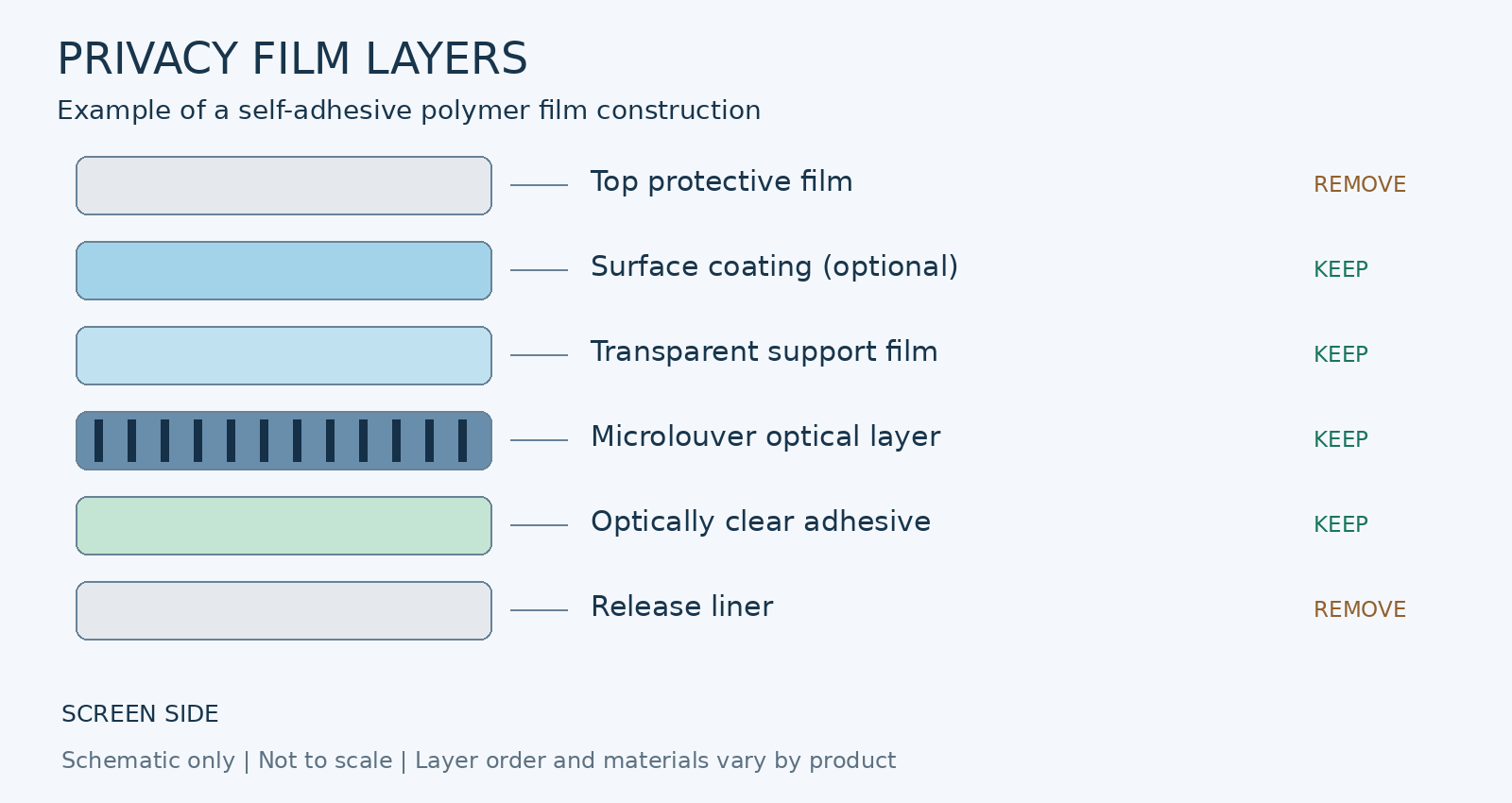
Figure 1: Structural example of a self-adhesive polymer privacy film (English labels). Not representative of any specific model or actual thickness proportions.
Transparent Support Layer
The transparent support layer commonly uses optical-grade PET film to provide mechanical support and dimensional stability for functional structures. Actual products may incorporate more than one support film layer; material selection, thickness, and lamination method should follow supplier specifications. [1]
Privacy Optical Layer
A common micro-blinds structure consists of light-transmitting and light-absorbing regions, designed to restrict light transmission in specific directions. The effective privacy viewing angle depends on structural dimensions, pitch, and orientation. This is not a standard transparent coating, nor can it be universally attributed to prism effects or optical interference materials. [2]
Surface Treatment and Adhesive Layer
Some products include a hard-coating layer to improve scratch resistance. Whether anti-fingerprint or other surface treatments are applied must be verified per product specification. Hardening does not guarantee immunity to scratching, nor does it equate to smartphone screen drop resistance. [3]
Self-adhesive privacy films typically require a transparent adhesive layer to bond the film to the display surface. This adhesive layer serves a different purpose than the resin used during microstructure fabrication. Adhesive selection and lamination quality directly impact installation experience and must not be omitted when describing film composition. [1]
Protective Film and Release Liner
Surface protective films used during transportation and processing—and release liners covering the adhesive surface—are generally removed per instructions prior to installation, and are not part of the final functional privacy layer. Different products may use varying materials; it is incorrect to assume both front and back layers are PE film, nor should the support film be mistakenly removed as a protective film. [1][4]
An Example UV Micro-Replication Process
Some privacy films employ UV-curable micro-replication: microstructures are formed using a mold, then combined with light-absorbing material to create the blinds effect. The diagram below illustrates a simplified process flow; actual steps, number of UV curing cycles, and lamination sequence vary depending on formulation and equipment. [2]
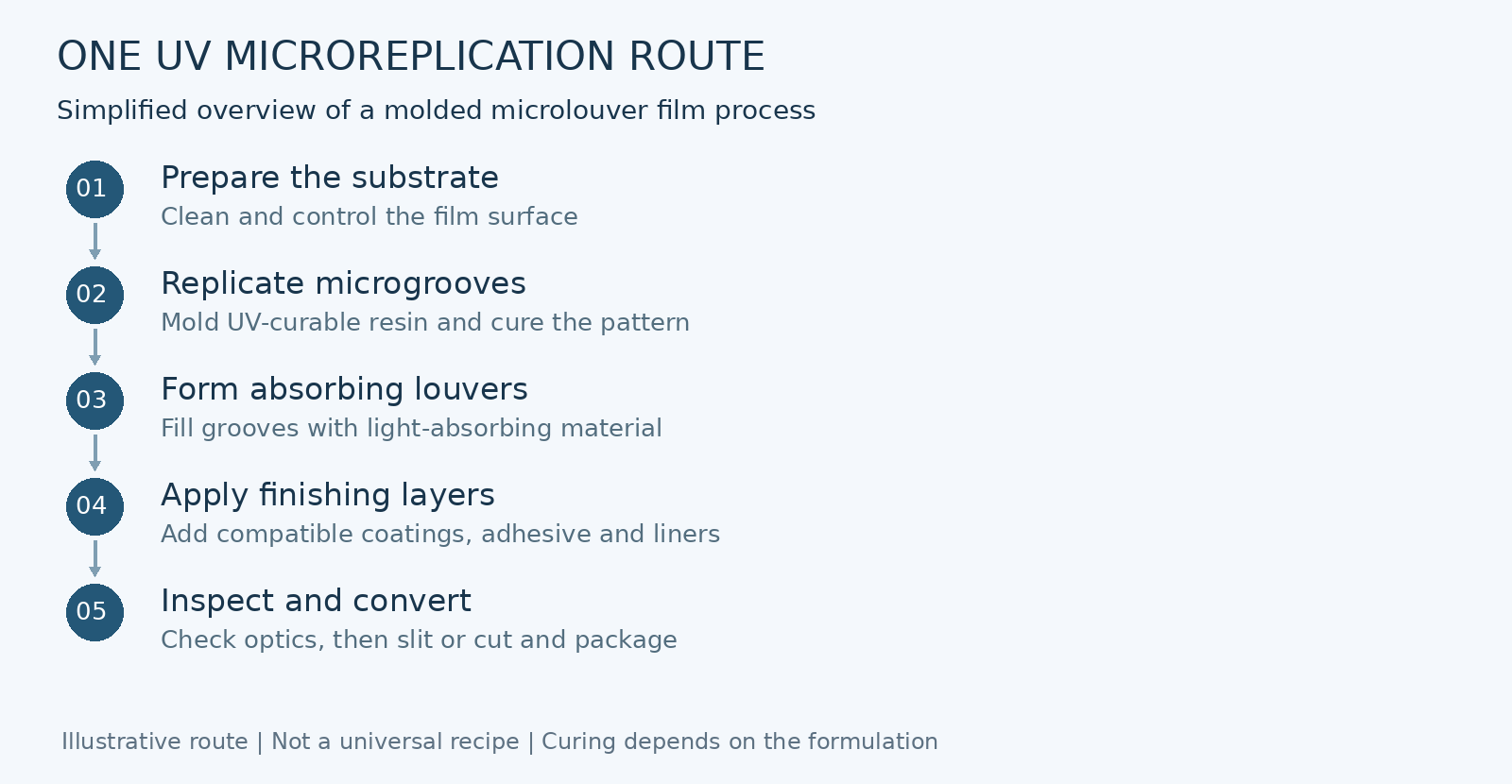
Figure 2: Conceptual flow of UV micro-replication process. For educational purposes only—not a universal production formula applicable to all privacy films.
From Substrate to Finished Product
First, a transparent substrate is prepared, cleaned, and inspected for surface condition to minimize dust and defects that could affect downstream processing.
In one mold-based forming approach, UV-curable resin replicates fine grooves; after UV curing, stable patterns are formed, and black light-absorbing material is selectively filled into designated areas to construct the optical structure that limits viewing angles. Simply coating and curing generic UV resin does not automatically yield privacy functionality. [2]
Subsequent steps include applying surface treatments, laminating adhesive layers, and attaching protective materials—per design requirements. Whether heat drying is needed, and which curing method is adopted, depend on the material system and process specifications; not all steps can be collectively labeled “UV curing”.
Finished products undergo inspection, followed by slitting, die-cutting, or packaging. Inspection criteria should align with intended use—covering front-side display clarity, side-view privacy performance, cosmetic defects, and adhesion quality. UV curing performed at the factory does not mean end users must expose the film to UV light during installation.
Procurement and Usage Guidelines for Retail Stores
When procuring, confirm privacy direction (e.g., horizontal/vertical), front-side clarity, thickness, adhesive type, and device compatibility. For blank films requiring cutting with a plotter or CNC cutter, verify material compatibility with the equipment and ensure correct orientation of design files relative to the privacy structure. Cutting alters shape only—it does not upgrade or change the inherent privacy direction.
When presenting products, describe privacy performance, scratch resistance, anti-fingerprint properties, and installation method separately—do not infer one property from another. For specific models, cite test data for privacy angle, light transmittance, and scratch resistance—avoid reusing parameters from unrelated products.
Conclusion
Privacy film is a composite product integrating optical structure, support materials, and surface/adhesive engineering. Selection should consider not only side-view concealment but also front-side visual quality and real-world adhesion performance—to identify the optimal solution for your application scenario.
References
1 3M Display Surface Products Application Guide — Example of layered construction
2 LG Chem, US8444885B2 — Example of microstructure formation and light-absorbing material filling
3 US6770352B2 — Example of optical film hard-coating technology
4 3M Advanced Light Control Film — Explanation of dual-sided protective layers